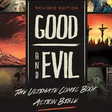
Good and Evil Comic Book
No Greater Joy Ministries, Inc.Comics
4.720.00 Reviews
- Version
- 2026.6.11
- Installs
- 10.00K
- Age Rating
- Everyone 10+
Screenshots

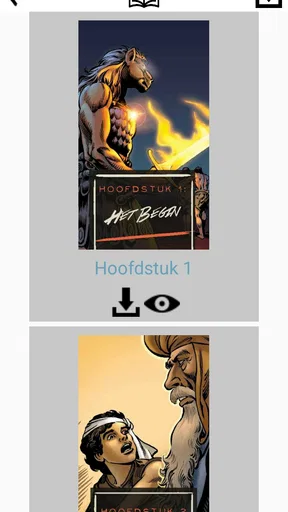
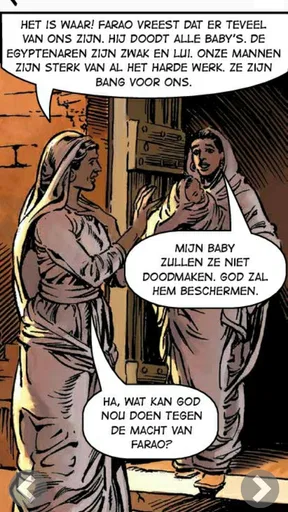
Our Review of Good and Evil Comic Book
 Analysis by Appyee
I approached Good and Evil Comic Book less like a quick reading app and more like a visual guide for anyone who wants to follow the Bible as a connected story. Its central idea is simple: present biblical events in comic-book form and arrange them chronologically, creating a reading experience that feels more approachable than opening a conventional study Bible at random. After spending time with it, I think its real value is not speed or visual spectacle, but the way it gives readers a clear narrative path.
This is a free comics app from No Greater Joy Ministries, Inc., aimed at an Everyone 10+ audience. It has built a solid reputation, with a 4.7 average from around 170 ratings and over 10K installs. Those figures do not replace personal judgment, but they do suggest that the app has found a useful place among readers looking for a faith-based visual resource.
How I Decided Whether It Was Worth Using
My first question was not whether the comics looked attractive. It was whether the format could make a long, complex collection of Bible stories easier to follow without turning reading into a chore. That matters because many people who want to explore the Bible struggle with its structure, changes in setting, unfamiliar names, and the distance between individual books. A chronological comic can help by giving the reader an ordered route instead of requiring constant decisions about where to begin.
The app contains over 300 pages in comic-book format. That is enough material to feel like a substantial reading project rather than a short illustrated sample. I found that scale useful for judging the app as a continuing resource. You can use it for a brief reading session, but it also supports a slower routine in which you return to the next section when you have more time.
The most important decision criterion is therefore your preferred learning style. If you understand stories more easily through panels, speech, and visual sequence, this approach has an immediate advantage. If you prefer detailed commentary, verse-by-verse explanation, maps, cross-references, or the exact wording of a particular translation, a standard Bible app or study tool will probably serve you better.
I also considered whether the app works for different kinds of readers. Parents may want a visual introduction for older children, adults may use it as a refresher, and newcomers may appreciate having the broad storyline made less intimidating. At the same time, the age guidance means I would not treat it as a preschool picture book. The Everyone 10+ rating is a useful reminder that the subject matter and presentation are better suited to older children, teenagers, and adults.
A chronological route changes the reading experience
One of the strongest choices here is the chronological organization. A traditional Bible is arranged by groups of books and literary types, not as a straightforward timeline. That arrangement has its own purpose, but it can make the overall story difficult to grasp on a first pass. This comic format removes some of that initial friction by encouraging me to think in terms of events and progression.
That does not mean chronology solves every interpretive question. Biblical events can involve overlapping accounts, different perspectives, and material that does not fit neatly into a modern timeline. I would not use the app as the final authority for resolving those issues. I would use it as a narrative foundation, then consult a Bible or study resource when I wanted exact textual detail.
That distinction is important. The app is strongest when I want to understand how major episodes relate to one another. It is less suitable when my goal is close reading of a passage. In practical terms, I see it as a first pass, a refresher, or a companion for discussion rather than a replacement for every other Christian reading resource.
Where the Comic Format Wins
The visual structure makes a noticeable difference when attention is limited. A page of panels gives the eye several entry points, and the sequence helps establish who is acting, what changes, and what consequence follows. I found that especially helpful when approaching stories with many characters or unfamiliar settings. Instead of holding every detail in my head while reading dense paragraphs, I could follow the movement from one panel to the next.
That makes the app practical for short sessions. Someone with only a few quiet minutes can read a small portion without needing to prepare a study desk or gather several reference materials. I can imagine using it during a family reading routine, as a conversation starter after dinner, or as a way to revisit a story before discussing it with a youth group. The app’s free price also removes the usual hesitation about trying a new resource.
Another non-obvious strength is its usefulness as a bridge between age groups. An adult who already knows the broad outline can use the pictures to invite questions from a younger reader, while a teenager who finds conventional study material too formal may be more willing to begin with a comic. The format does not guarantee understanding, but it lowers the barrier to starting a conversation.
I would also recommend reading it with a pencil or note-taking app nearby, not because the comic requires academic work, but because visual summaries can create a false sense of completeness. When a story moves quickly, I may remember the main action while overlooking a detail that deserves a closer look. Writing down questions such as “Where does this event appear in the Bible?” or “What happened before this?” turns passive reading into a useful study workflow.
Useful ways to build a routine
My preferred approach is to avoid trying to finish too much at once. I would read a manageable section, pause at a natural story break, and then compare the episode with the relevant Bible passage if I wanted more context. This two-step method makes the comic valuable without asking it to do a job it was not designed to do.
A second approach is to use it before a more traditional reading. The comic can provide a mental outline first; the Bible can then supply the language, detail, and depth. For a reader who often loses track of the wider narrative, that order may be more comfortable than beginning with a long passage and trying to reconstruct the background alone.
A third approach is discussion-based. Two readers can look at the same sequence and ask what the panels emphasize, what questions remain, and which parts should be checked in the original text. This is where the comic format becomes more than decoration. It gives people a shared visual reference, which can make conversation easier for readers who would otherwise hesitate to speak.
These workflows are more valuable than simply scrolling through pages. The app works best when I treat it as an entry point into reflection, conversation, or further reading. If I only want a quick visual summary and never plan to slow down, I may miss much of its educational potential.
What the developer and current release tell me
No Greater Joy Ministries, Inc. presents the app as a focused religious comics resource rather than a broad entertainment catalog. That focus is helpful because the experience does not need to compete with unrelated content. The current version is 2026.6.11, and the listed minimum operating-system requirement is 2.0, which makes the app approachable for readers using older supported devices.
I would still judge compatibility in the normal way before committing to a long reading plan. Older operating systems can be convenient, but a reader’s actual experience can depend on screen size, display quality, and how comfortable the device is for extended reading. A larger phone or tablet is likely to make comic panels easier to examine than a very small screen, especially for anyone who needs to zoom or hold the device farther away.
The app’s free model is one of its clearest practical advantages. There is no purchase decision standing between curiosity and the first reading session. That makes it easy to recommend as a trial for a family, a church discussion group, or someone who is unsure whether illustrated Bible material will work for them.
Where Other Options May Fit Better
The biggest limitation is also the defining feature: a comic is a condensed presentation. It has to select moments, arrange them visually, and keep the story moving. That can make the experience engaging, but it also means the reader should not assume that every nuance, genealogy, repeated account, or theological distinction receives equal attention.
If your main goal is daily Bible reading with search, bookmarks, multiple translations, audio, or detailed study tools, a conventional Bible app is the more sensible choice. I would not switch away from those tools entirely. They are better for checking wording, comparing passages, tracing themes, and returning to a specific verse. Good and Evil Comic Book serves a different purpose: helping the reader see the larger story through a visual sequence.
It may also be the wrong choice for someone who dislikes illustrated religious material or wants a strictly literal reading experience. Some readers simply connect more deeply with prose, while others prefer listening to an audio Bible during a commute or household task. In those cases, the comic format may feel like an unnecessary layer rather than a helpful shortcut.
There is another trade-off for serious students. Visual storytelling naturally guides attention. The panel size, composition, and sequence can make one moment feel more prominent than another. That is useful for narrative clarity, but it means the reader is receiving an interpretation of emphasis. I would be comfortable using the app to orient myself, but I would consult primary biblical texts and trusted study materials before forming a detailed conclusion about a difficult passage.
Families should also make a deliberate choice about how they introduce it. The age rating makes it more appropriate for older children than for very young readers, but age alone does not determine whether every story is comfortable for a particular child. Some biblical episodes involve conflict, danger, grief, or morally serious decisions. I would read alongside a child at first and use difficult scenes as opportunities for explanation rather than handing over the device without context.
The switching cost is low, but the habit matters
Moving from a standard Bible app to this comic is easy because the two resources can complement each other. I do not see a need to delete one to use the other. The real cost is not money; it is the possibility of developing a habit of summaries without returning to fuller source material. That is why I recommend deciding in advance what role the comic will play.
For a newcomer, it can be the starting line. For a parent, it can be a shared reading aid. For a familiar reader, it can be a visual refresher before deeper study. In each case, the best workflow is to pair selected comic sections with the Bible passages they prompt you to explore. That keeps the experience accessible while preserving room for detail.
Readers who already have a carefully organized study system may not need to change much. They can add the app when they want a broad overview or a different way to approach a familiar narrative. Readers without any system may benefit from setting a simple goal, such as reading a short section several times a week and recording one question after each session. This prevents the large page count from becoming an overwhelming project.
The app is also easy to recommend because its category is clear. It is not pretending to be a general comics library, a game, or a replacement for a complete Bible study suite. That narrow purpose helps me decide when to open it: when I want Bible stories presented as a connected visual narrative, not when I need every possible reading feature in one place.
My Recommendation for Different Readers
I recommend Good and Evil Comic Book to readers who want a free, visual way to understand the Bible’s broad storyline. It is especially suitable for newcomers, older children reading with guidance, teenagers who respond well to panels, and adults who want a concise refresher before returning to longer passages. The chronological structure gives the experience direction, while the comic format makes short reading sessions realistic.
I would also recommend it to families and small groups, with one condition: use it as a conversation tool rather than treating it as the only resource. Ask what stood out, identify questions, and look up the passages that deserve more attention. That simple habit turns an accessible comic into a doorway for more thoughtful reading.
I would skip it if you are specifically searching for extensive study functions, exact textual comparison, audio listening, or a comprehensive reference system. In that situation, a dedicated Bible app or printed study Bible is the better fit. I would also skip it if you strongly dislike visual adaptations and prefer to encounter every story directly through prose.
For me, the final judgment is positive because the app understands its own strongest role. It does not need to replace a Bible, commentary, or study library to be useful. It needs to make a large and sometimes difficult narrative easier to enter, remember, and discuss. With over 300 pages to explore, a free price, and a clear chronological focus, it offers a practical starting point for readers who learn best through images.
My clear recommendation is to try it as a visual companion, not as your only Bible resource. Read a section, pause, ask what the comic helped you understand, and then decide whether you need the fuller passage or another reference. Used that way, it is approachable without being superficial, focused without pretending to cover every study need, and genuinely useful for turning a complicated collection of stories into a journey that is easier to follow.
Verdict
Strengths of Good and Evil Comic Book
- Clear good-versus-evil storyline that is easy to follow.
- Distinctive comic artwork creates a memorable visual style.
- Short chapters make it convenient for quick reading sessions.
- Works well for readers who enjoy classic superhero themes.
- Simple navigation makes browsing pages and chapters effortless.
Limitations of Good and Evil Comic Book
- The plot may feel predictable to readers seeking complex twists.
- Some characters receive limited development outside the main conflict.
- Reading comfortably on smaller phone screens may require zooming.
- The darker themes may not suit younger or sensitive readers.
- Content availability may vary depending on the device or platform.
Similar Picks in This Category
View All
WEBTOON: Manga, Comics, Manhwa
NAVER WEBTOON4.6

MangaToon: Comic & Manga
MangaToon4.3

네이버 웹툰 - Naver Webtoon
NAVER WEBTOON4.3

Tapas – Comics and Novels
Tapas Entertainment Inc.4.2

Lezhin Comics - Daily Releases
LEZHIN ENTERTAINMENT3.3

WebComics - Webtoon & Manga
WEBCOMICS HOLDINGS HK LIMITED4.4
Frequently Asked Questions
What is Good and Evil Comic Book about?
Good and Evil Comic Book is a digital comic-reading experience centered on the classic conflict between heroic and sinister forces. The app presents its story through illustrated pages, dialogue, and dramatic scenes, making it suitable for readers who enjoy fantasy, action, and moral confrontations. Before downloading, remember that the exact storyline, characters, and available chapters may vary depending on the version installed.
Is Good and Evil Comic Book free to download and use?
The application may be available to download at no initial cost, but users should check the store listing carefully for possible advertisements, optional purchases, or locked content. Some comic apps provide only selected pages or chapters for free and require payment to unlock the complete experience. Pricing and availability can also differ between Android and iOS.
Does Good and Evil Comic Book require an internet connection?
An internet connection may be needed when first opening the app, loading comic pages, downloading additional content, or displaying advertisements. Depending on how the application stores its material, some pages may remain available offline after they have been loaded, while others may not. If offline reading is important to you, verify the app’s current permissions and store description before installing it.
Is Good and Evil Comic Book suitable for children?
Parents should review the age rating and content description before allowing children to use Good and Evil Comic Book. Although the title may appeal to younger comic fans, stories involving good and evil can include battles, frightening characters, dark themes, or mild violence. The app may also contain advertising or external links, so parental supervision is recommended for younger readers.
What devices are compatible with Good and Evil Comic Book?
Compatibility depends on the edition available through the Android or iOS store, as well as the operating system version installed on your device. Most supported phones and tablets should display the comic correctly, but older devices may experience slower loading, layout issues, or limited performance. Check the official download page for the latest system requirements before proceeding.
